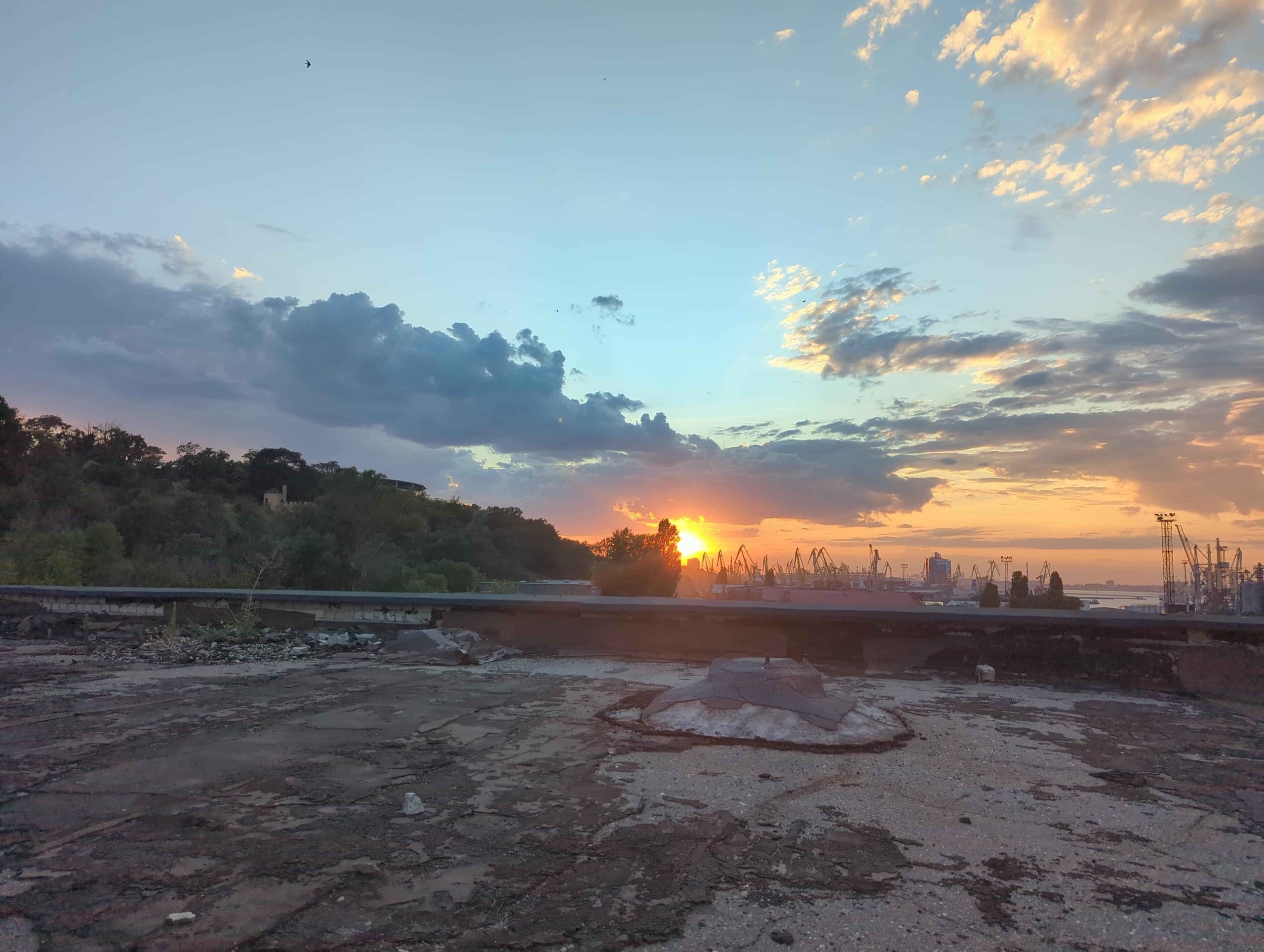
On Saturday, July 4, 2026, our delegation departed for our second trip to Ukraine. Just like last year in autumn, our goal this time was to build connections and exchange ideas. We traveled with people from various groups: from the Dresden Anarchist Network, Anarchist Black Cross Dresden, and FAU Dresden (anarcho-syndicalist labor union). Our destination for Saturday evening was Rzeszów (a city in southeastern Poland), where we met up with people from ABC Galicia. We’ve been working with them since the start of the full-scale invasion in Ukraine, and it’s always great to see each other again. After a fantastic barbecue, we pushed our starting time for the next day to 5 a.m. so that we could get at least some sleep.
Read more: Lviv – Odesa – Kyiv delegation trip #2It took us four hours to cross the border, so we arrived almost on time for our meeting with Prjama Dija (an independent student union) in Lviv. We had already met people from this union last October in Kyiv and were eager this time to meet the people in Lviv, about whom we’d heard so much last year. We met at a vegan café and spent three hours there, discussing various political topics, introducing our groups, and enjoying a delicious meal. The members of the student union are all between 18 and 23 years old. Sasha, who has already graduated from University, told us that the members would like to build a union where people can continue to organize even after they finish their studies. But Sasha also says that he’s afraid of the army. In Ukraine, young men are drafted starting at the age of 25, but he would just like to continue his union activism. Toni, Reja, and Tanja told us about the Pride in Lviv, during which a queer wedding took place. And we discussed the threat posed by Nazis in Lviv and Dresden, and how people are organizing in response.
We also met Leo, someone who is originally from Mariupol. Leo lived under Russian occupation for two years. During those two years, as they told us, it felt like Leo didn’t live in Mariupol, but rather in a parallel world — at home, in their own room. During that time, Leo read Ukrainian books that were lying around in an empty school and played video games. At some point, it became clear that a different life was needed, so Leo fled to Lviv and has been living here ever since.
After a short night at our beautiful lodging in one of Lviv’s old townhouses, we decided to spontaneously visit the oldest existing cemetery in Lviv – Lychakivske, since the Jewish museum has been dismantled for security reasons and the exhibits from it are currently in temporary storage somewhere. This cemetery reflects the complexity of the region’s history. In addition to many Polish graves, there are also Austrian graves from the Austro-Hungarian Empire times and Russian graves from the Soviet era. Alongside the older graves, the historical and political debates of the last decade are also evident here: the glorification of the UPA (the Ukrainian Insurgent Army), war graves from both sides of the Polish-Ukrainian War of 1918–1919, and memorials to those who have fallen since 2014. In front of the actual cemetery lies a large burial ground containing the remains of those who died in the current war.
For lunch, we met up with a comrade who is currently staying in a rehabilitation clinic in Lviv. Jura is from Crimea. Before the occupation, there was a very active anarchist scene there, which was involved in many social, environmental, and anti-capitalist struggles. After Russia’s occupation of Crimea, many anarchists were imprisoned and the rest of the movement was suppressed. Many people from the movement are now participating in the armed struggle against Russia with the hope to eventually be able to return home. Even though the prospects for that are very low and a return in the near future is hardly possible. In any case, Jura had to flee Crimea and was drafted to the army in 2025. He later got seriously injured during the Battle of Pokrovsk. He was rescued by volunteer medics who evacuate the wounded from the front lines. It was a miracle that they were able to save at least one of his legs. Since then, he has been fighting to walk again and is waiting for a prosthetic leg. He is receiving support from comrades and organizations that assist veterans in their recovery. Formally, he is still enlisted as a soldier, but with such a severe injury, he can leave the army as soon as he recovers. The Ukrainian military is paying for his treatment. He is currently staying in the rehabilitation clinic, so his most basic needs are being met. He is determined to move back to Crimea. Throughout this difficult time, he has held strong to his anarchist ideals, solidarity, and the common struggle.
Much of what Jura told us cannot be made public here, as it could have political and personal consequences. It will most probably take a while before these important stories can be shared publicly. It was good to exchange ideas and hear his perspective. It’s important to show solidarity with war veterans and not leave them alone with their sometimes very severe injuries. These issues are also relevant for us in Germany. And in particular: how people with limited mobility can participate in our movement on equal basis.
After our meeting with Jura, we set off for Odesa on Monday evening. Our plan was to arrive after curfew — so, after 6:00 a.m. Part of the reasoning was that it’s safer to stay outside the cities at night, because that’s when attacks tend to happen.
As we were good with the timing, we stopped at a rest area for a two-hour nap. We were aware that Russian drones have recently been specifically targeting gas stations. In fact, that happened several times that night as well, just in a different region of Ukraine.
In the morning, 40 km before Odesa, our car’s coolant pump broke down unfortunately. After some back-and-forth, we were able to arrange a tow truck to evacuate us. However, it only had room for two of us, so we split up into groups and hitchhiked or took a marshrutka (a minibus). Once we finally arrived in Odesa, we met up again at a great café and continued our culinary journey with vareniki (type of dumplings, bolied dough with a filling, normally the salty ones are with potatoes or meat, sweet ones are with cherries or cottage cheese), syrniki (fried cottage cheese), eggplant ragout, and other delicious treats. Although it didn’t look promising at first that we will be able to find a repair shop, the bus was repaired almost immediately. At six o’clock in the evening, we finally arrived at our destination, the CP3-2 housing project.
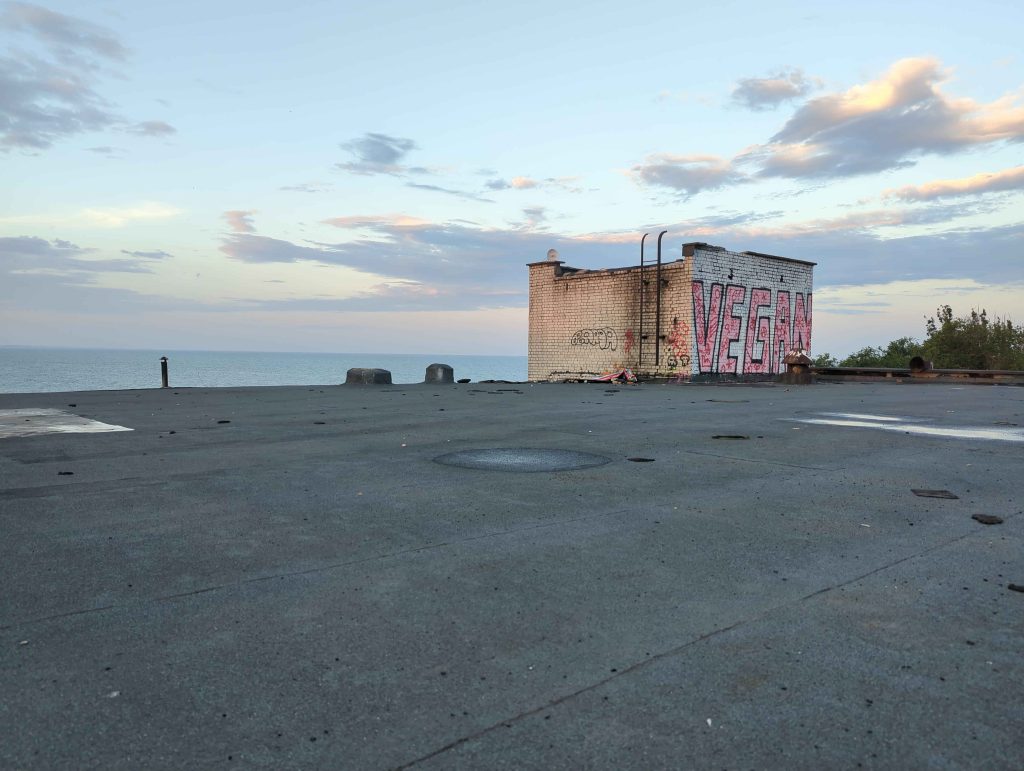
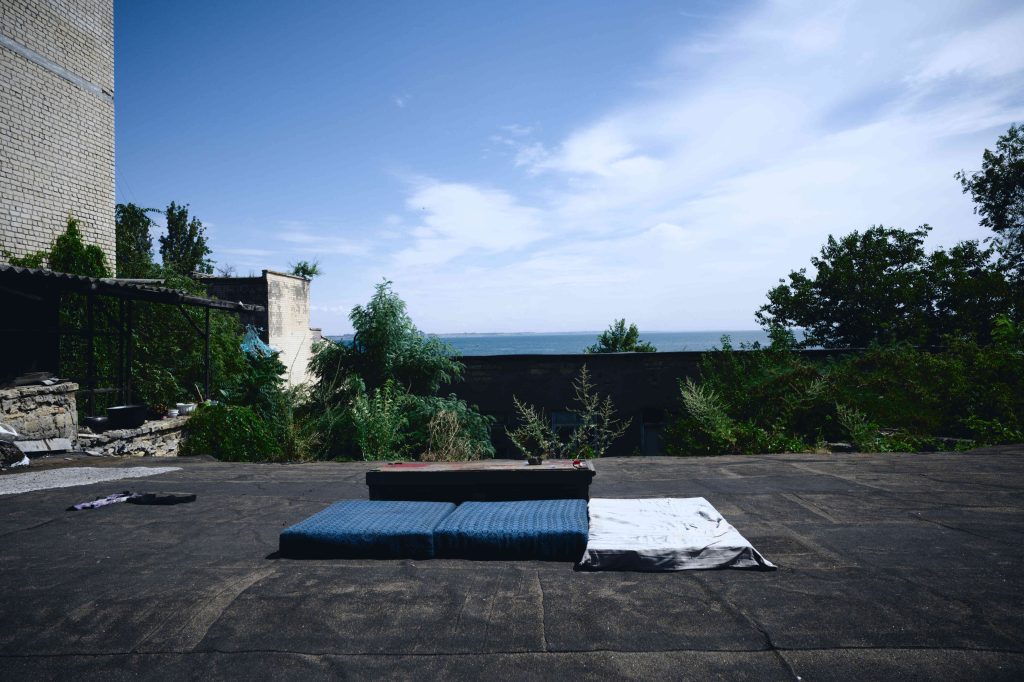
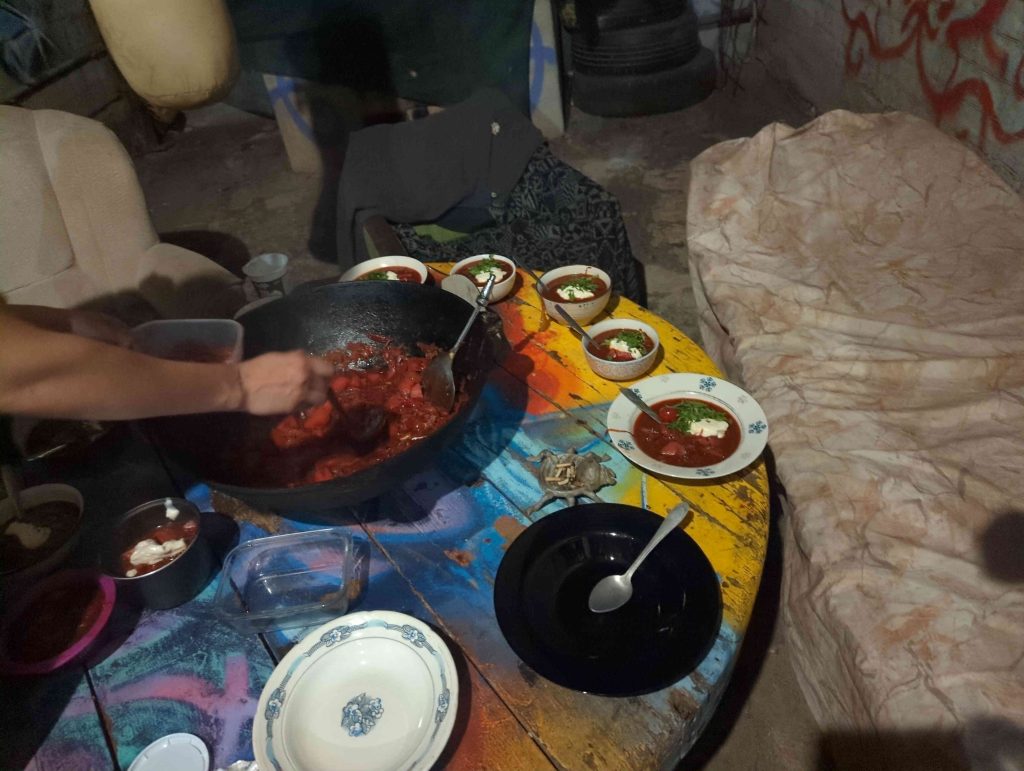
After a brief introduction, we jumped right into the Black Sea. The water was pretty cold, and the situation felt a bit surreal. The house, which is a communal space almost right by the sea, is located between hotels and an industrial area. As soon as we got out of the water, the air raid siren went off, and we heard an explosion, fortunately, far away. So we hurried back to the house and, on the way, took a look at the potential shelter. Afterwards, we were given a tour through the house and an overview of the work done by Street Aid Daily (SAD). This is an initiative that supports homeless people in Odesa. The house project serves as a storage facility for the donated goods that the initiative distributes on a regular basis.
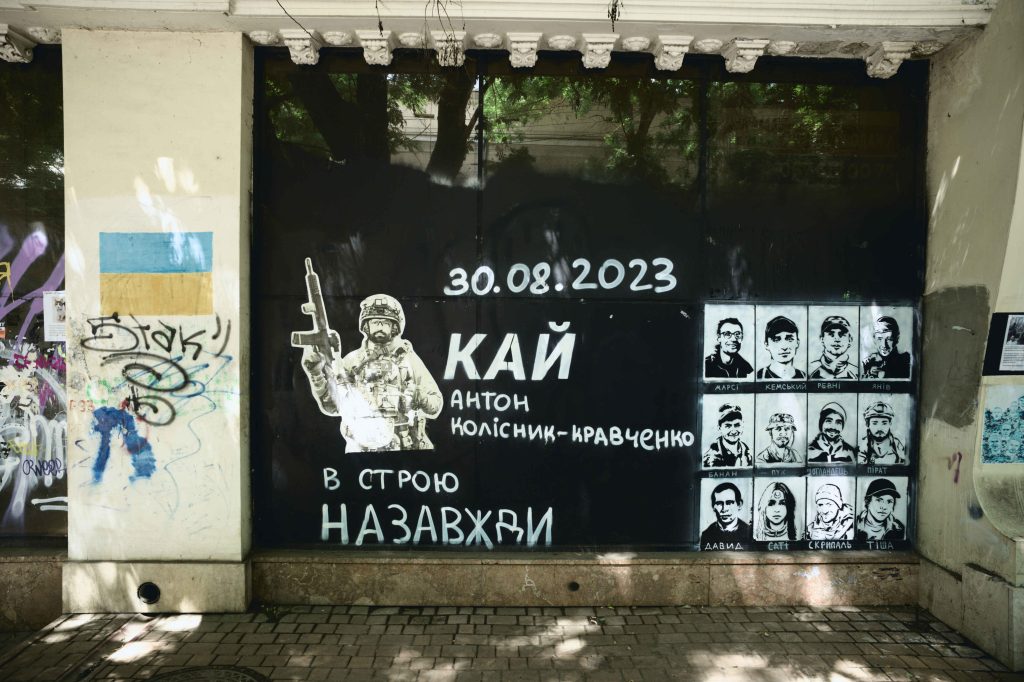
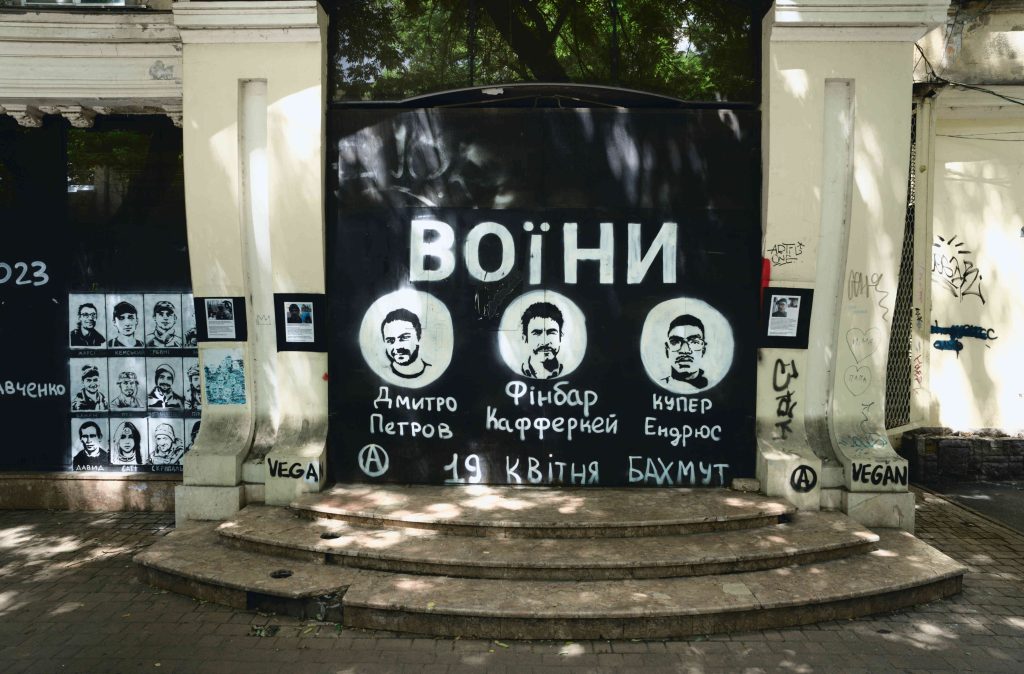
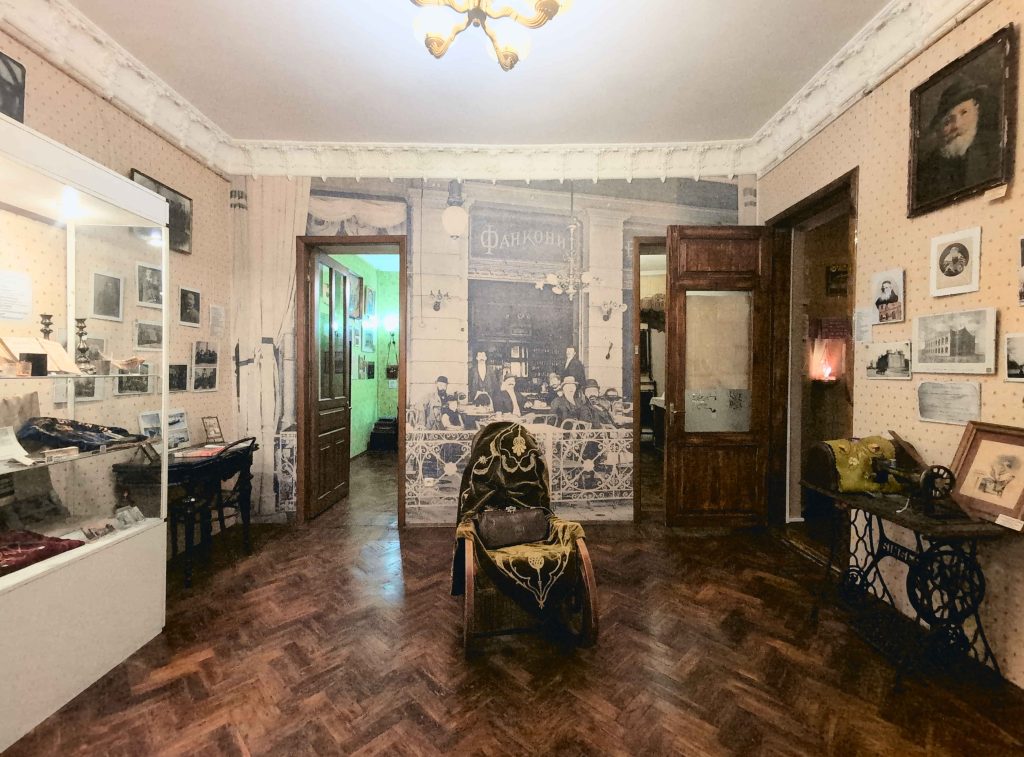
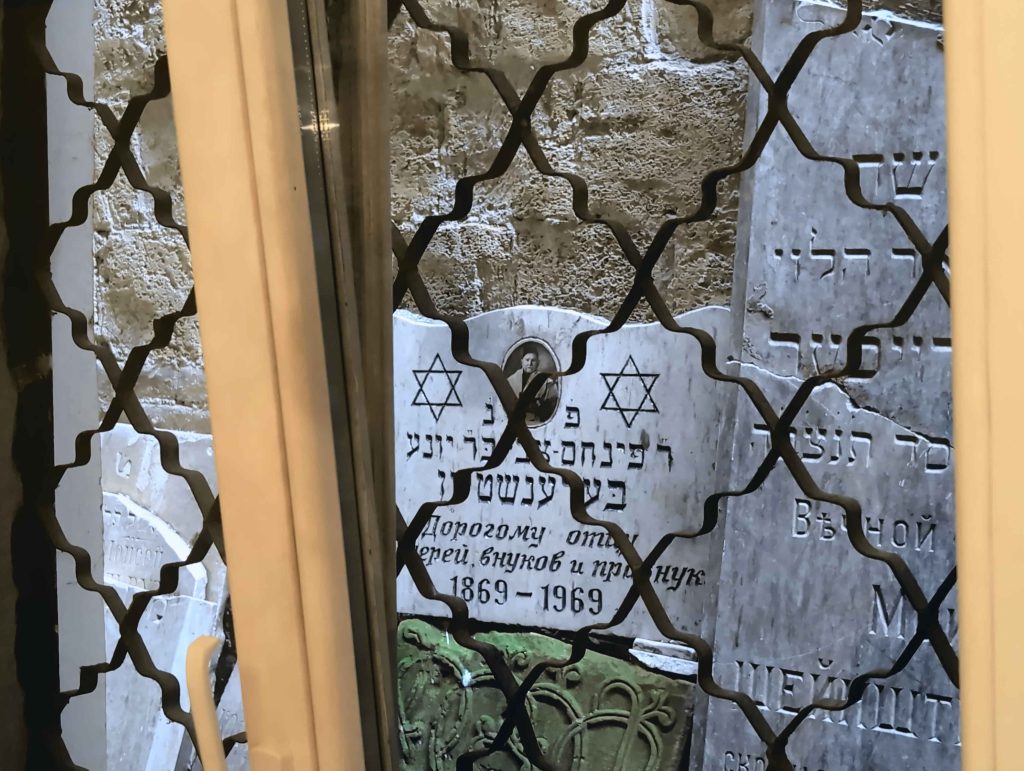
On Wednesday, we went to the Old Town, met up with a friend, had breakfast in the park, explored the city, and took a tour in the Jewish Museum. We found the graffiti in remembrance of the fallen comrades in the city.
Odesa has historically been a cosmopolitan city with strong Jewish influence. In 1791, Empress Catherine’s anti-Semitic policies limited the area where the Jewish population was permitted to live in the Russian Empire to a strip in the west. The tchum-ha-mojschew, or Pale of Settlement, stretched from the Baltic Sea to the Black Sea. By the end of the 19th century, approximately 5 million Jewish people lived there. At the Jewish Museum, we learned that Odesa became a place of new opportunities in the 19th century, attracting many Jewish families. In the 1920s, the Jewish population in Odesa reached its peak of 140,000 people, accounting for approximately 44% of the total population of the city. Before World War II, Odesa had 80 synagogues. In 1941, however, the city was occupied by the Germans and Romanians. First there were pogroms and mass killings in the city, followed by deportations to the surrounding rural areas, where Odesa’s Jewish population was almost completely wiped out by mass shootings.
We were very excited to visit the museum and wanted to learn more about Odesa’s Jewish history. Our guide at the museum is a sixth-generation member of a Jewish Odesa family still living in the city. Russia’s war against Ukraine is also having a profound impact on the mood within the Jewish community. With the start of the full-scale invasion, two communities have left the city. In an ironic twist of history, they found refuge in the two countries that were responsible for the Nazi policy of extermination in the region: Germany and Romania. Many have also emigrated to Israel. Currently, there are still three synagogues existing in the city. But there are only two communities that meet in one synagogue. They are fighting to preserve Jewish cultural life.
During our visit to the museum, there was yet another attack on Odesa.
We organized an event on Wednesday evening, and people from outside the house also joined it. We gave a brief presentation on our solidarity work and how it is influenced by the political situation in Germany and the mood within the anarchist and leftist movements. We discussed and exchanged ideas about common strategies during the war, how decisions are made, and how dissenting opinions are handled. Afterwards, we watched short films that address the war and remembrance work. The meeting had to be paused several times because Odesa was attacked by Russian ballistic missiles that evening. Seven people were killed and several injured during the night. That evening, we met a wide variety of activists: some, who had been in the war and had been demobilized; some, who were planning to go to the front in the near future; and also some, who were trying to leave the country. A key part of all discussions about the war was about what everyone planned to do next. Our Ukrainian comrades showed great interest in political developments in Western Europe and were concerned about how the rise of the far right might further influence the anarchist movement.
Before we left on Thursday, we went for one last swim in the sea. Our schedule was very tight, and our time at the house was far too short. We got to know a wonderful community that is very diverse and consists of various artists and activists. They have been organizing politically over the past six years and share common principles. The people in the house are united by two fundamental ideas: the right to housing for all and the right to life for all (the house serves only vegan food). We were deeply moved by how the residents show up for each another during these difficult times.
Finally, we headed to Kyiv, where we had plans to meet some friends for dinner. The situation in Kyiv has been very stressful in recent months. That’s what everyone we met has been teling us. The winter without electricity and heat is still taking its toll on many people and is affecting people’s health. The changed security situation is robbing everyone of sleep. In revenge for the destruction of Russia’s oil and gas infrastructure, the Russian Air Force is terrorizing Kyiv. More ballistic missiles are currently being deployed, leading to even greater destruction. The area around the Lukyanivska metro station (part of the long metro line located at the west bank of the river) looks terrible. In October, we met there several times, ate together, and shopped at the small market. Now everything is destroyed.
On Friday morning, a friend gave us a guided tour of Babyn Jar (also spelled as Babi Yar, and is a deep valley that served as the site of one of the largest mass murders of World War II). In 1941, the largest massacre of World War II took place here. 33,771 Jewish people (according to German statistics) were murdered here in just two days. This site was once on the outskirts of the city, but due to urban development, parts of the former Jewish cemetery and the killing site have since been built over. In total, approximately one hundred thousand residents of Kyiv from all ethnic groups were murdered here by 1943. Patients from the nearby psychiatric hospital who were murdered in a gas chamber were also brought here. We had already visited Babyn Yar during our last trip and discussed the design of the site. This is the subject of some heated debate. There are a lot of memorials there, including works by famous artists. However, many people feel this is inappropriate for a place where so many people died and believe that the space itself is already a memorial itself.
In the afternoon, we first met with Kyiv-based members of Prjama Dija, and then with people from Solidarity Collectives (SolCol) at their new office. Both initiatives talked about their current work, and we caught up on what has happened since our last visit.
So far, we’ve been lucky in Kyiv and have been able to sleep relatively peacefully. On Friday night there were rocket attacks and we had to go down to the basement for shelter. A major problem right now is that with ballistic missiles, people have about 3 to 5 minutes after the alarm goes off to get to safety. That night, the first rockets exploded before the air raid siren went off. So we went downstairs after the first wave of bombings and waited. Fortunately, that was the end of it, and we were able to return to our beds after about an hour.
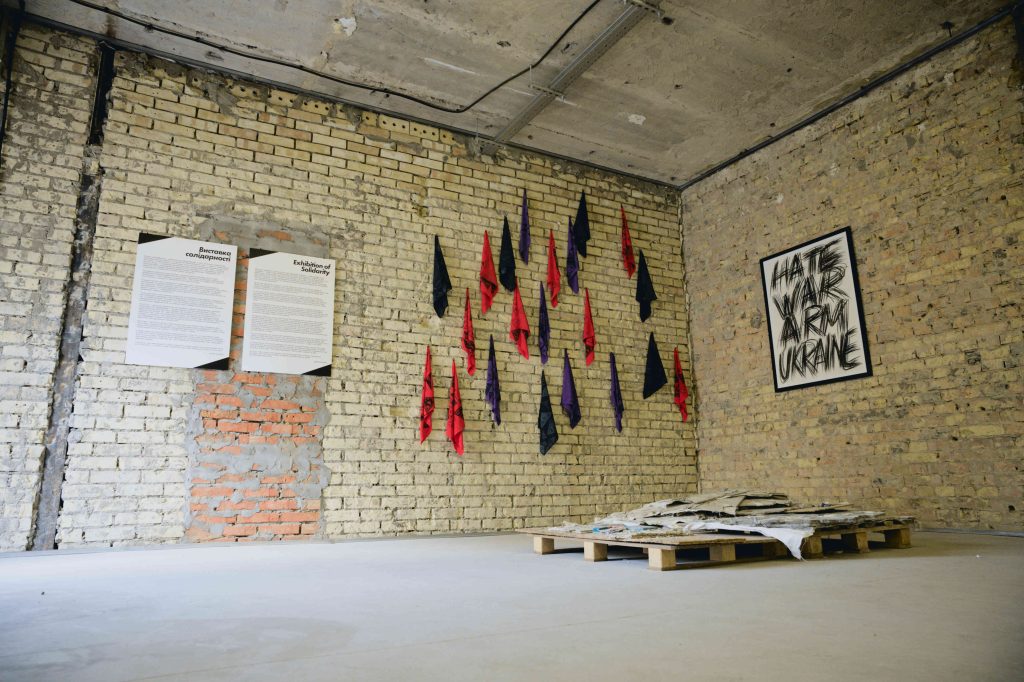
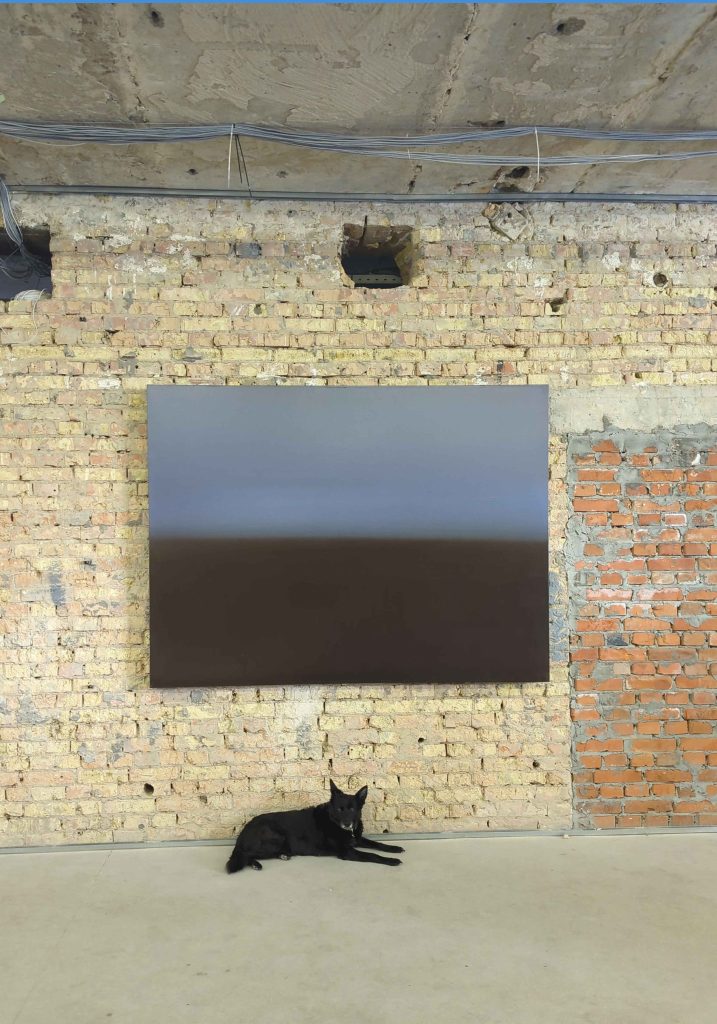
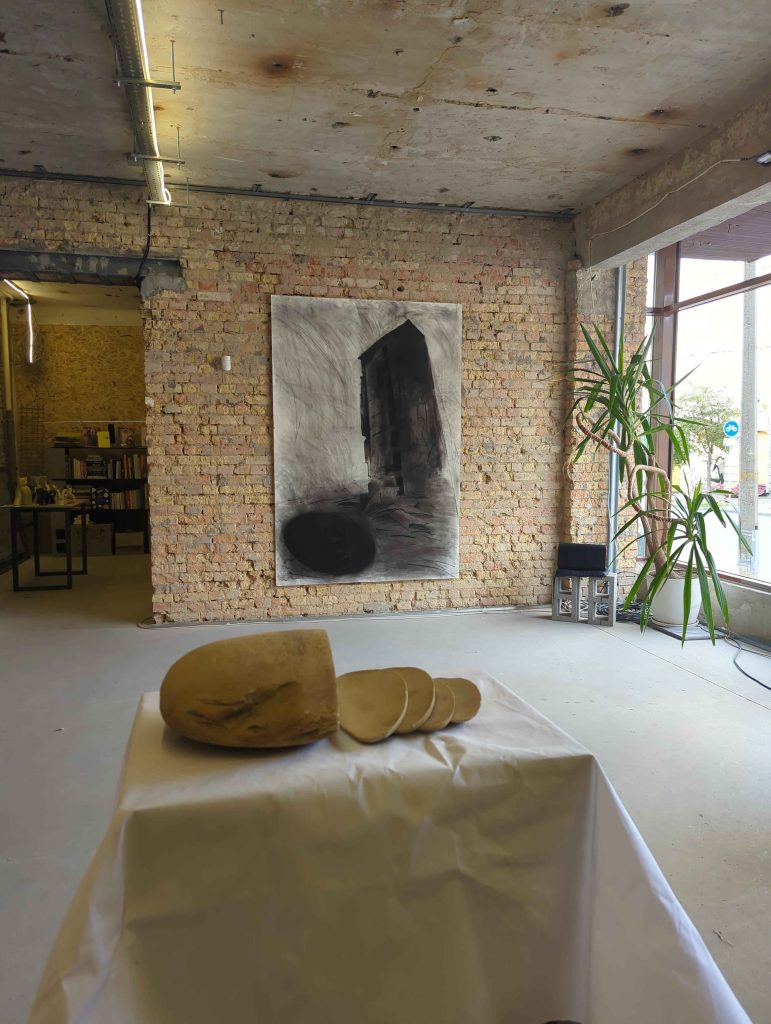
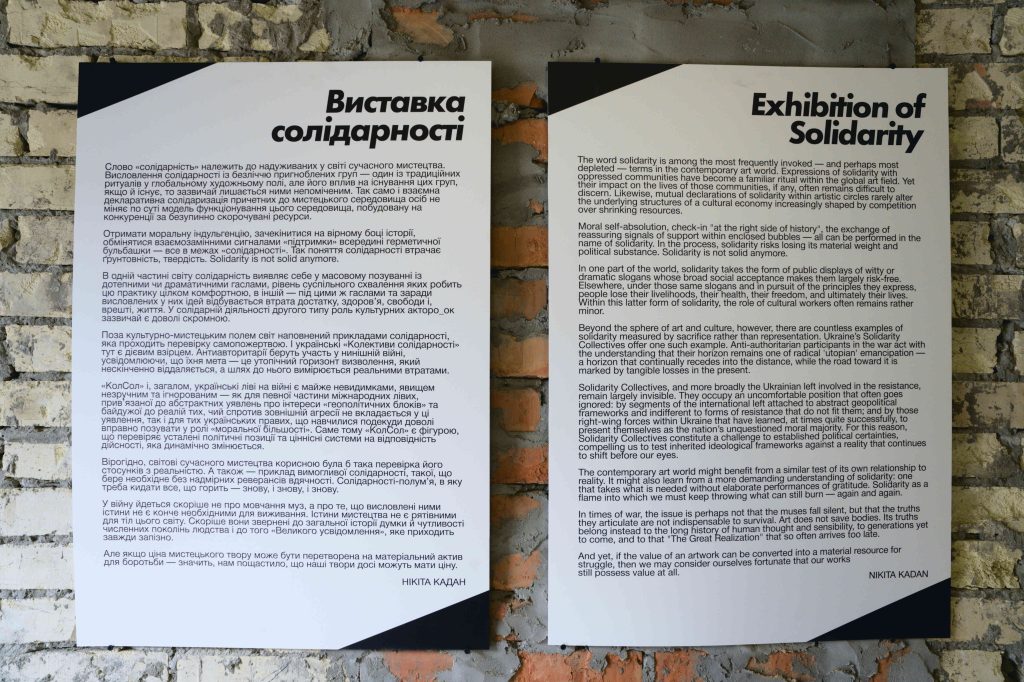
On Saturday afternoon, we stopped by SolCol again, checked out the DIY workshop for assembling (FPV) drones, and helped with some renovation work. Afterwards, closer to the evening, we went together to the closing event of the “Solidarity Exhibition” at the “Hinaus” gallery in the Podil district of Kyiv. The gallery organized an exhibition featuring contemporary Ukrainian artists in cooperation with SolCol. Above all, the exhibition helps SolCol become better known within Ukraine and raise funds through the sale of the exhibited works. One month before the exhibition opened, Podil district was severely hit by missle attacks, and the gallery was also almost completely destroyed. But with many helping hands, it reopened, even though in a somewhat improvised manner. The current atmosphere, however, enhances the impact of the exhibition, which explores the war from various artistic perspectives.
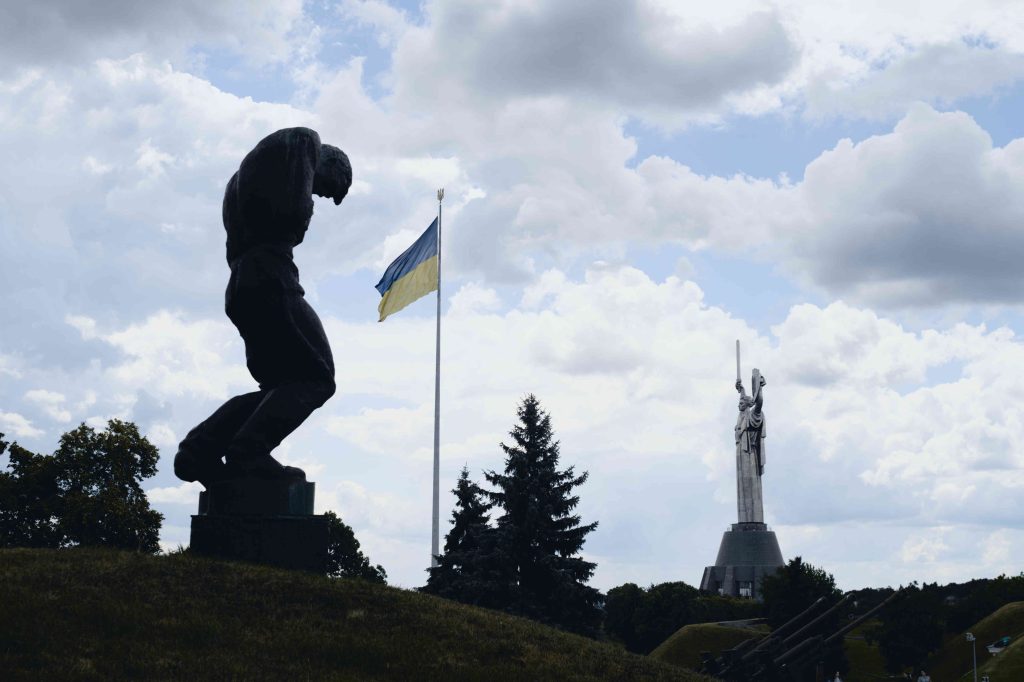
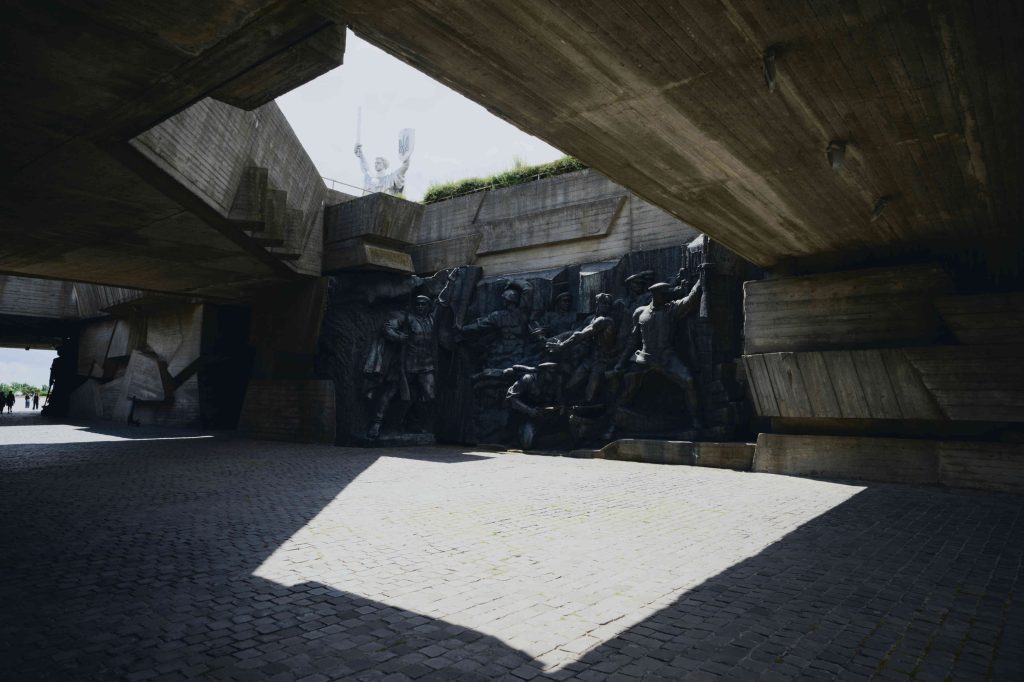
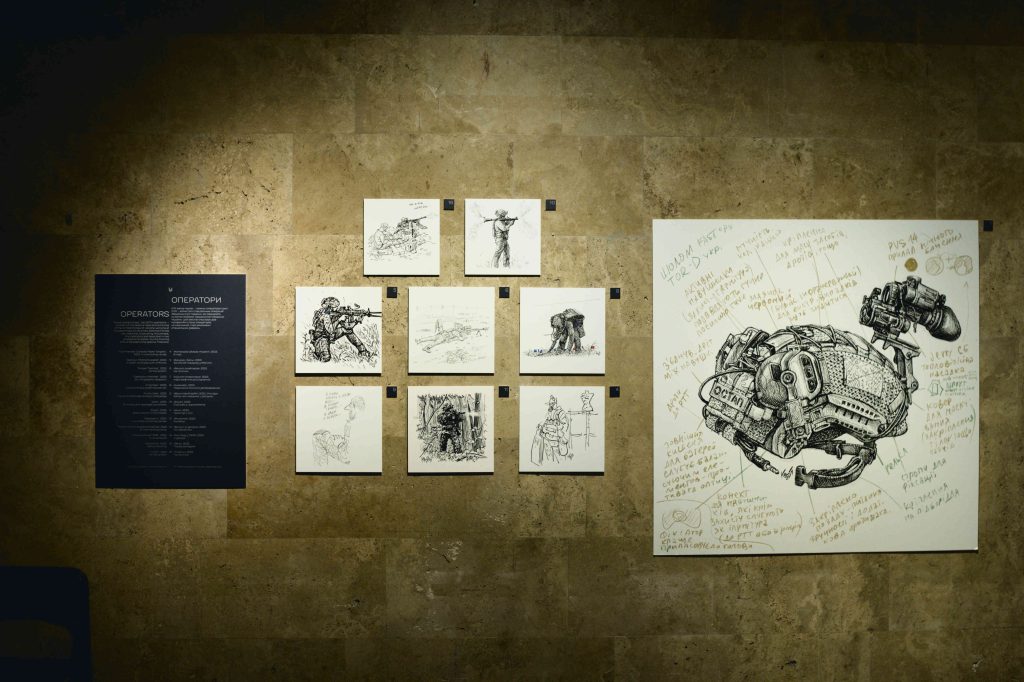
Sunday was Museum Day again. We walked across the large outdoor grounds past Soviet sculptures, and where also military equipment from World War II and the present day is on display. We wented to the massive statue of “Mother Motherland.” It symbolizes the Red Army’s victory over Nazi Germany, and the War Museum is housed within its pedestal. The exhibits there evoked very mixed feelings in us. First, there was a small exhibition marking 10 years of the Ukrainian Army’s special forces, presented in a comic-book style that was highly glorifying. Another exhibition part tells the stories of international volunteers in the Ukrainian Army, who have very different motivations and political views. Though the exhibition does not address these differences. “War: Inverse Perspective,” on the other hand, showcases various artistic approaches to World War II and the Russian invasion. In the exhibition’s entrance area, visitors walk through a Socialist Realist relief to then look “inside.” The exhibition featuring three female artists from Ukraine and Germany was also fascinating. One of them discovered through a photo album that her grandfather had been stationed in Ukraine as a Wehrmacht soldier and had taken many photos from the occupiers’ perspective, some of which look like tourist snapshots. This is contrasted with the perspective of Ukrainian family history under the occupation, supplemented by several artistic works by the current generation. Overall, there are currently very different ways of engaging with the topic of war at this location.
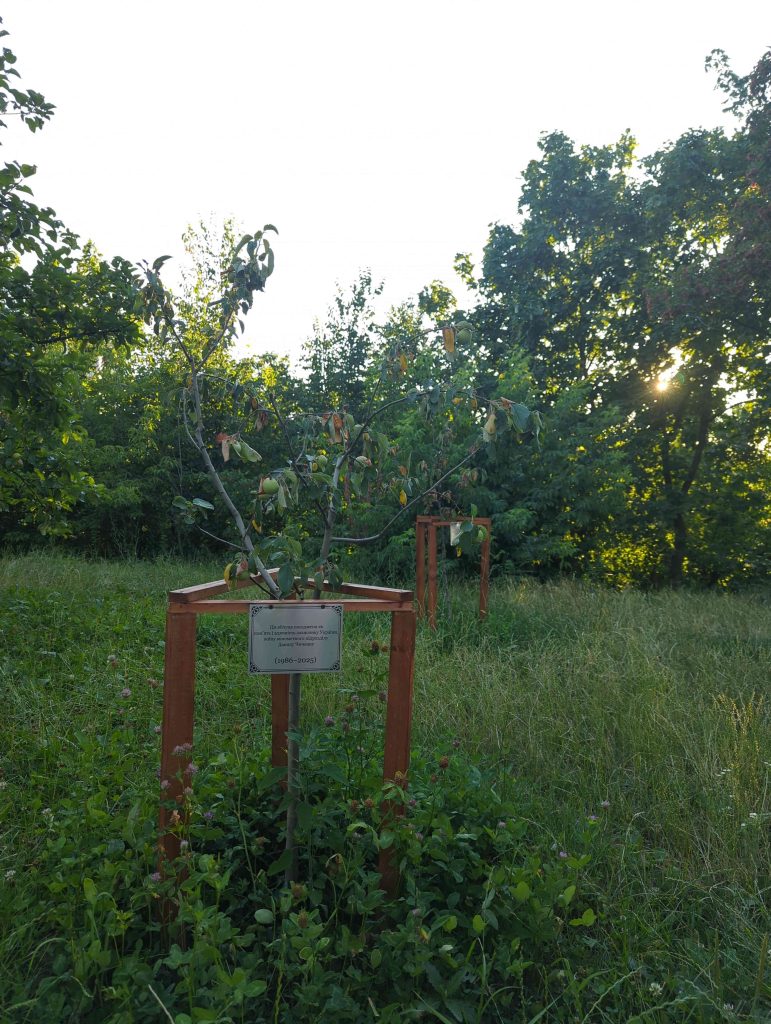
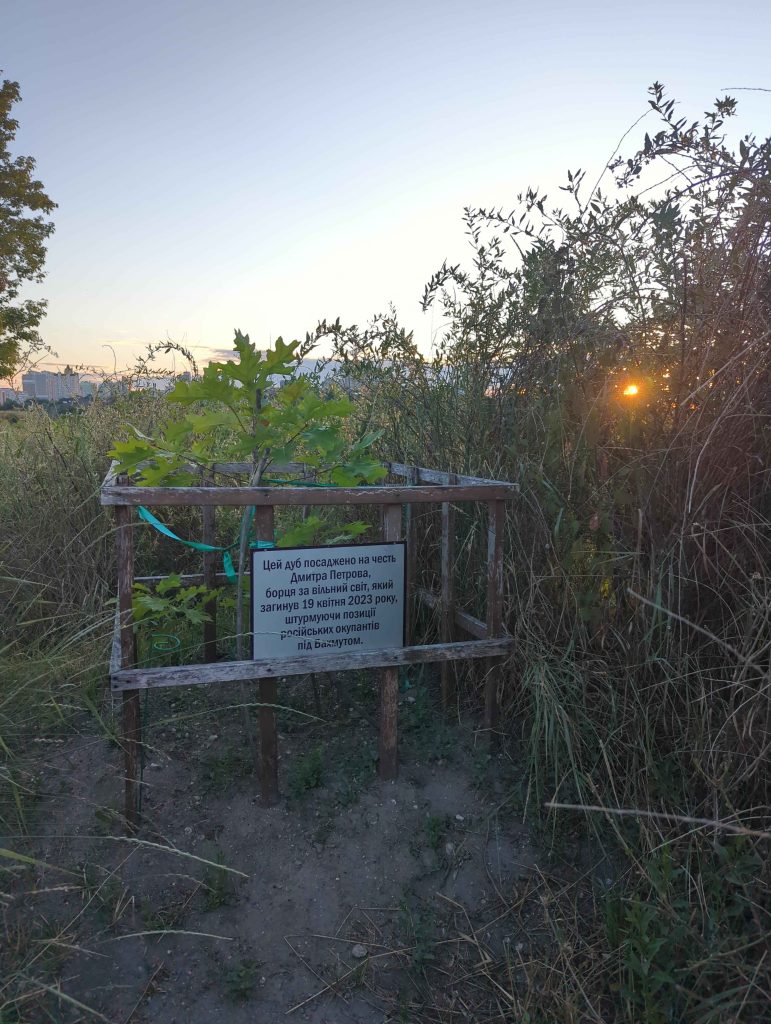
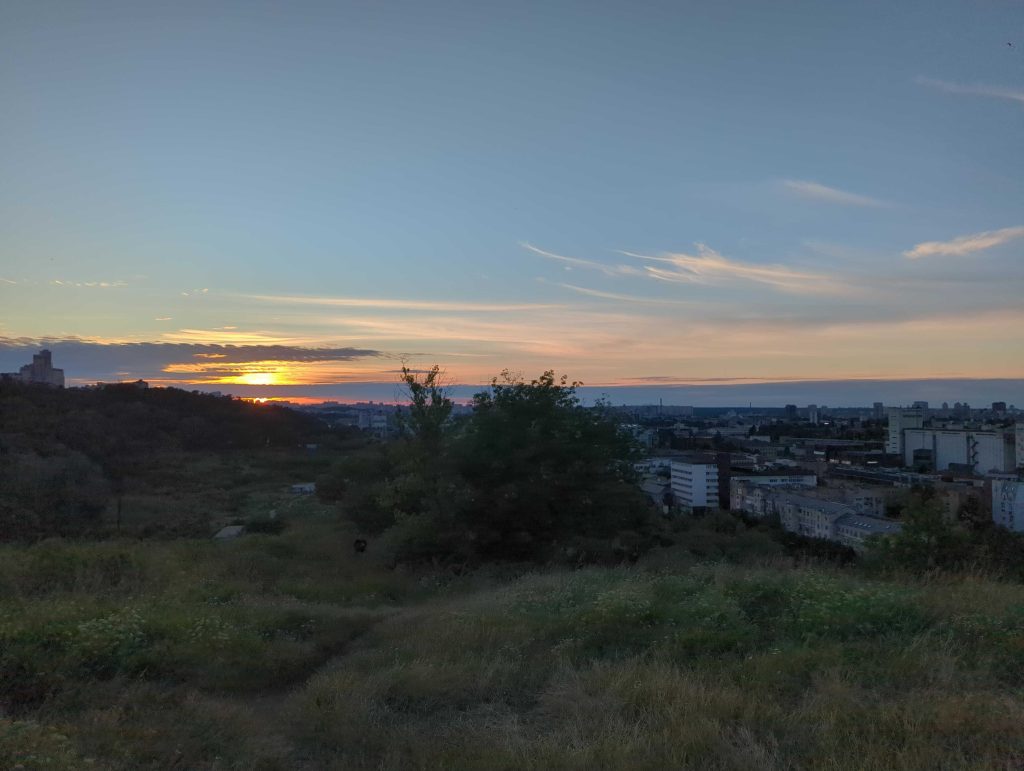
At sunset, we visited two sites where memorial trees had been planted for fallen anarchists. After more than four years of war, there are various ways of dealing with loss within the movement. Solidarity Collectives have also created and published a zine on this topic: https://www.solidaritycollectives.org/en/zine/
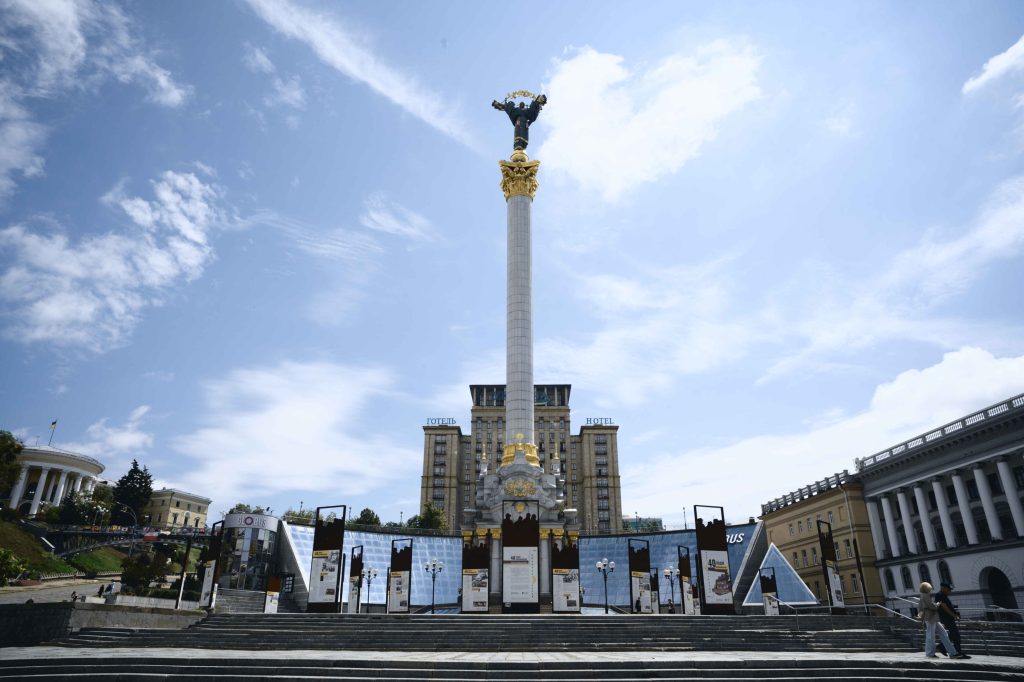
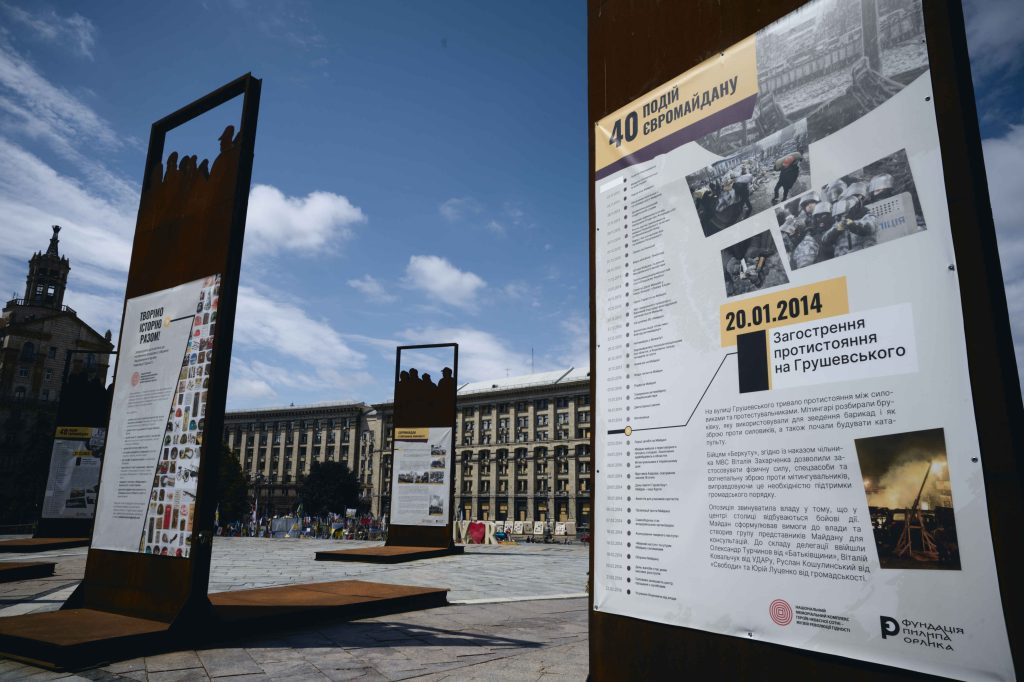
On Monday, we took a walk through downtown and across the Maidan, Independence Square, and viewed the exhibition on the 2014 revolution. It was moving to be interrupted by a funeral procession. Often, fallen soldiers are driven through their city to the cemetery in a convoy accompanied by flags and sometimes music. As the procession passes, people pause at the roadside to show their respect.
Overnight into Tuesday, there were several ballistic missile attacks on Kyiv, but they were (largely) intercepted by air defenses.
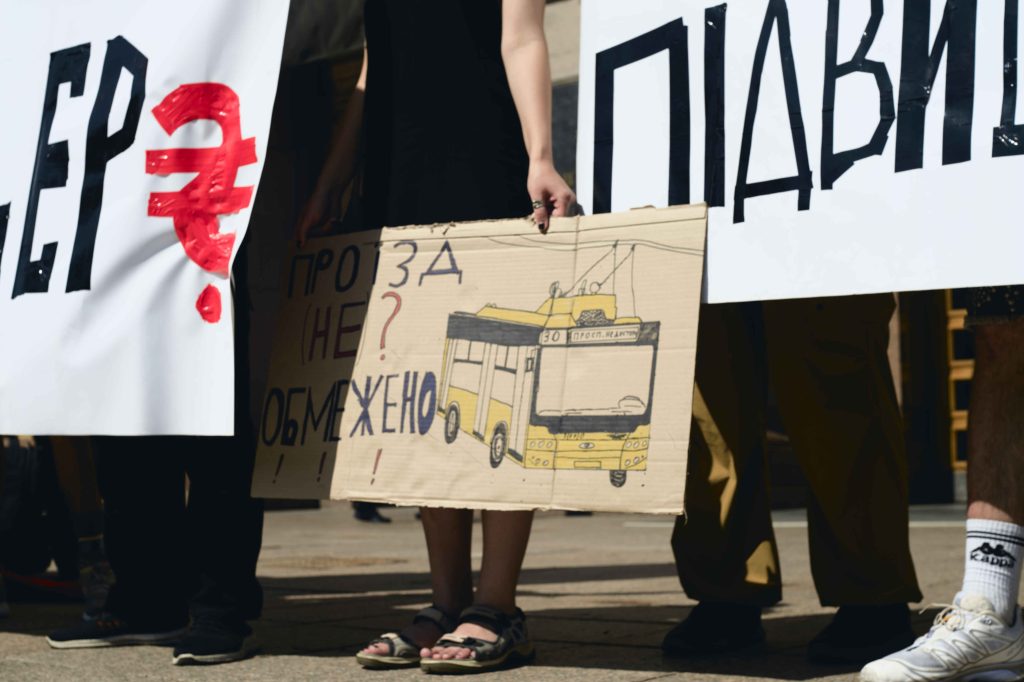
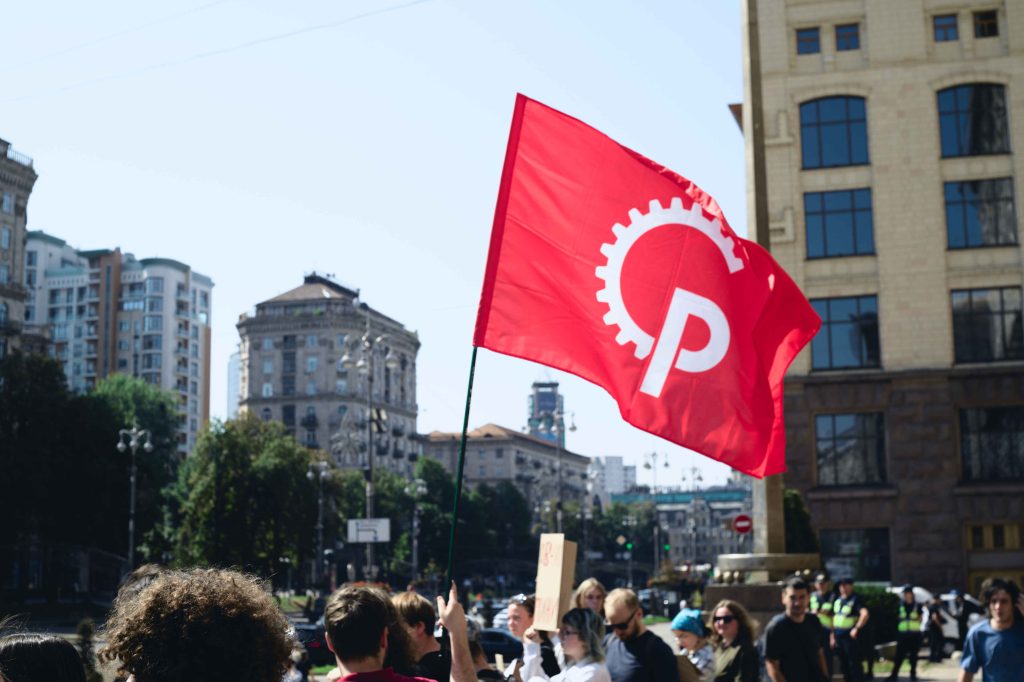
In the morning, a meeting was held at Kyiv City Hall regarding plans to make the public transport ticket prices three times higher. Outside City Hall, Socialny Ruch (Social Movement group) , with the support of the student union Prjama Dija, organized a protest against this, in which we participated as well. Slogans such as “Bread or a metro ticket?” and “Are you a mayor or a thief?” were chanted. Speakers emphasized the connection to the extremely high rents in Kyiv: those who cannot afford an apartment in the city center are most dependent on the metro. In addition, a participant of the 2014 revolution reported that the rising prices hit the elderly particularly hard because pensions are very low and do not keep pace with inflation.
In the afternoon, we visited the Folk Architecture Open-Air Museum, where pre-industrial villages from all parts of Ukraine are on display. Unfortunately, the houses were closed that day; otherwise, we could have learned a lot about traditional crafts there. Even so, it was very interesting and, at the same time, relaxing to get away from the bustling city.
Before heading back to Dresden, we met up with members of Solidarity Collectives and Prjama Dija for a farewell dinner.
It was once again a very moving trip filled with many impressions and encounters. They showed us that solidarity changes perspectives, strengthens exchange and connections, and brings people closer together. Many thanks to everyone who made this possible and supported the fundraising campaign.
We are already collecting money for our trip in October.
We will do this time a humanitarian trip again like last year. We are going to Kharkiv to visit displaced people in two dormitories.
Please support us with a donation: https://whydonate.com/fundraising/solidaritatsreise-unterkunfte-fur-kriegsvertrieben-in-charkiv-ukraine